
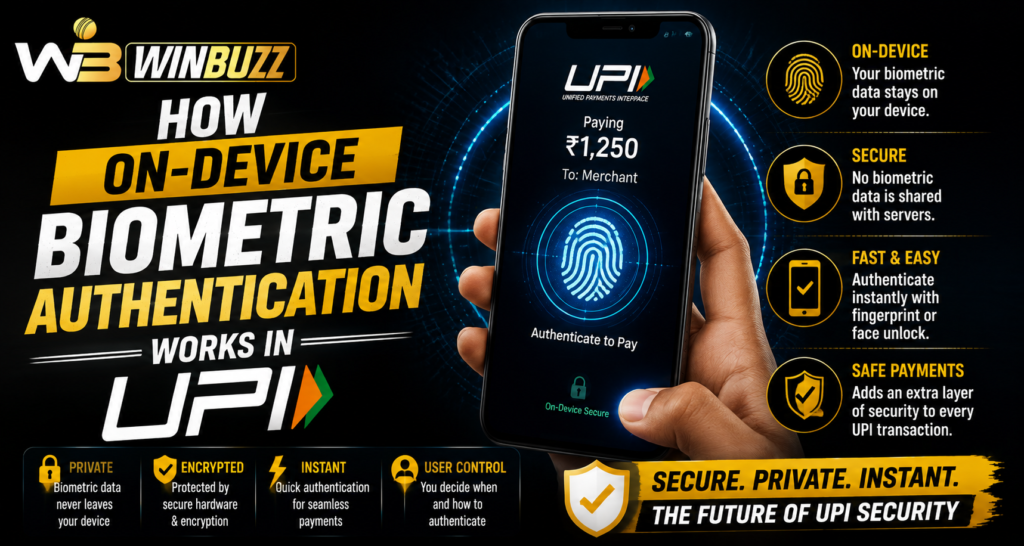
Introduction
Digital payments have become a major part of everyday transactions, and security has become equally important as convenience. UPI systems continue adopting stronger verification methods to protect users from unauthorised access. On-device biometric authentication is one such technology that allows users to verify their identity through features like fingerprints or facial recognition stored securely on their devices.
For Winbuzz users following digital payment and security updates, understanding how biometric authentication works can help create better awareness about modern payment protection methods.
What Is On-Device Biometric Authentication?
On-device biometric authentication is a security method where a smartphone verifies a user’s identity using built-in biometric features.
Instead of sending biometric information to external servers, the device processes the verification locally.
Common biometric methods include:
- Fingerprint scanning
- Face recognition
- Device-based security checks
The main purpose is to confirm that the person using the device is the authorised account holder.
How Biometric Authentication Works in UPI
When a user enables biometric verification for UPI-related actions, the process usually involves several steps.
The basic process includes:
- User initiates a payment or verification request
- Device asks for biometric confirmation
- Fingerprint or facial data is checked locally
- Device confirms identity
- UPI transaction continues securely
The actual biometric information generally remains stored inside the device’s secure hardware environment.
Why Biometric Data Stays on the Device
Modern smartphones use dedicated security areas to protect sensitive information.
These systems help ensure:
- Biometric templates remain private
- Apps cannot directly access fingerprint data
- External parties cannot copy biometric information easily
- Authentication happens securely
The device confirms whether the biometric match is successful without sharing the original biometric details.
Benefits of Biometric Authentication in UPI
Biometric verification provides several advantages for digital payment users.
Faster Payment Verification
Users can confirm identity quickly without manually entering passwords or PINs every time.
Better Convenience
Fingerprint or face verification can make payment experiences smoother.
Additional Security Layer
Biometric checks add another protection step along with existing payment security methods.
Reduced Password Dependency
Users do not need to remember multiple passwords for every digital service.
How Biometric Authentication Improves Payment Security
UPI payments already include multiple security layers, and biometric verification can provide additional protection.
Security benefits include:
- Identity confirmation before transactions
- Protection against unauthorised access
- Reduced risk from stolen passwords
- Device-based verification
However, users should still follow safe payment practices.
Limitations of Biometric Authentication
Although biometric technology is useful, it is not a complete replacement for all security measures.
Possible limitations include:
- Device hardware issues
- Recognition failures
- Damaged sensors
- Poor lighting for facial recognition
- Need for backup verification methods
Users should keep their devices updated and maintain alternative security options.
Protecting UPI Accounts With Good Practices
Biometric authentication works best when combined with responsible digital habits.
Users should:
- Keep phone software updated
- Use screen locks
- Avoid unknown applications
- Protect UPI PINs
- Never share OTP codes
Security depends on both technology and user awareness.
Role of Mobile Device Security
Since biometric verification depends on smartphones, device security plays an important role.
Recommended steps include:
- Installing official updates
- Downloading trusted apps
- Reviewing app permissions
- Using secure networks
- Avoiding suspicious links
A protected device creates a stronger payment environment.
Future of Biometric Payments
Digital payment technology continues evolving with more advanced security methods.
Future developments may include:
- Improved biometric accuracy
- Faster verification
- Stronger device security
- Better user privacy controls
As digital payments grow, secure authentication methods will become increasingly important.
Conclusion
On-device biometric authentication provides a convenient and secure way to verify users during digital payment processes. By processing biometric checks directly on smartphones, the technology helps protect sensitive information while improving payment convenience.
For users following Winbuzz live technology and security updates, understanding these features can help build better awareness of modern digital payment protection. Combining biometric security with responsible online habits remains essential for safer transactions.
FAQs
What is on-device biometric authentication?
It is a security method where a device verifies identity using fingerprint or facial recognition without sharing biometric data externally.
Does UPI store fingerprint information?
No. Biometric information is generally stored securely on the device and is not directly shared with UPI applications.
Is biometric authentication safer than passwords?
Biometrics provide an additional security layer, but users should still maintain strong device and account protection.
Can biometric authentication fail?
Yes. Sensor problems, device issues, or recognition errors can sometimes prevent verification.
Should users still protect their UPI PIN?
Yes. UPI PINs and other security details should always remain private even when biometric features are enabled.