
Introduction
Digital payments have made everyday transactions faster and more convenient, but keeping proper records after completing a payment is an important security habit. Saving transaction details helps users track payments, resolve issues, and maintain better control over their financial activity. For Winbuzz users following digital payment and account management practices, understanding which information to store can help prevent confusion during future payment-related situations.
Why Should Digital Transaction Records Be Saved?
Every digital payment creates important information that can help confirm the transaction status.
Keeping records can help with:
- Tracking completed payments
- Resolving payment disputes
- Checking transaction history
- Identifying errors
- Providing details to support teams
A simple record-keeping habit can save time if any issue occurs later.
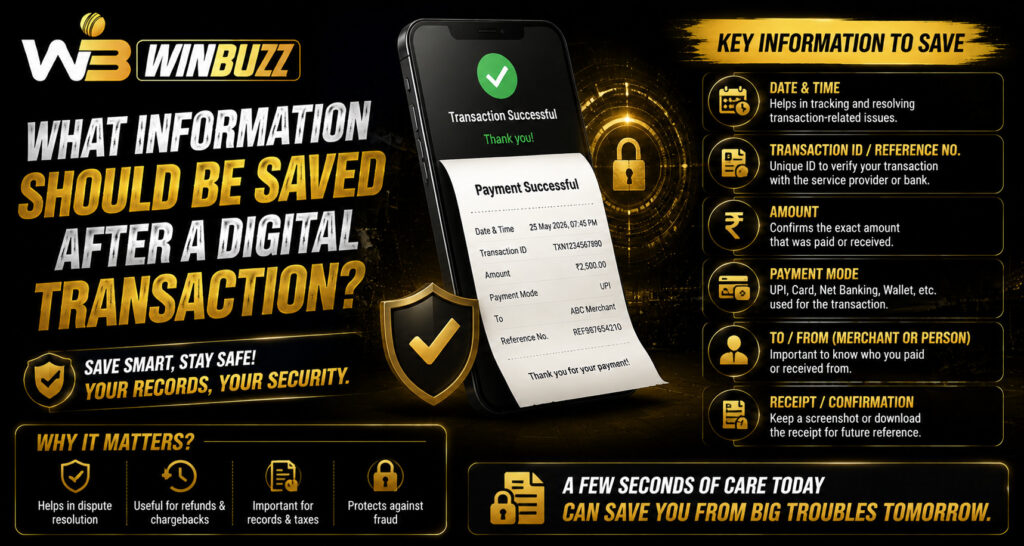
1. Transaction ID or Reference Number
The transaction ID is one of the most important details to save.
It helps identify a specific payment and is often required when:
- Reporting payment issues
- Checking transaction status
- Contacting support
- Confirming payment history
Users should keep this number safely until the transaction is fully completed.
2. Payment Date and Time
The exact date and time of a transaction provide useful context.
This information helps when:
- Multiple payments are made
- A transaction is delayed
- Comparing bank records
- Reviewing account activity
Accurate timing details make it easier to track payment movements.
3. Payment Amount
Saving the exact transaction amount helps users verify whether the correct payment was processed.
Users should record:
- Amount sent
- Amount received
- Applicable charges
- Final transaction value
This can help identify unexpected differences.
4. Payment Method Details
The payment method used is another important record.
Examples include:
- UPI
- Bank transfer
- Card payment
- Digital wallet
Knowing the payment method helps determine where to check transaction status if problems occur.
5. Confirmation Messages and Receipts
Digital receipts provide proof that a payment request was completed.
Users should save:
- Confirmation emails
- SMS alerts
- App notifications
- Downloaded receipts
These records can be useful during payment verification.
6. Bank or Wallet Statements
Transaction history from banks or payment applications provides additional confirmation.
Regularly reviewing statements helps users:
- Identify unknown activity
- Confirm completed payments
- Monitor account usage
Keeping financial records organised improves account awareness.
7. Screenshots of Important Transactions
Screenshots can be useful for quick reference.
A useful screenshot may include:
- Transaction status
- Reference number
- Payment amount
- Date and time
However, users should avoid sharing screenshots publicly if they contain sensitive information.
8. Keep Personal Information Secure
While saving transaction details is important, users should protect private information.
Avoid sharing:
- OTP codes
- Passwords
- PIN numbers
- Full banking credentials
Transaction records should only be shared through trusted support channels when required.
How Transaction Records Help Resolve Issues
Payment problems can happen due to:
- Network delays
- Bank processing time
- Incorrect details
- Technical errors
- Verification requirements
Having complete records makes it easier to investigate and resolve such issues.
After completing Winbuzz login, users should regularly review account-related information and maintain secure transaction records.
Best Practices for Digital Payment Records
Users can improve payment management by:
- Creating a secure folder for receipts
- Reviewing transaction history regularly
- Deleting unnecessary sensitive information
- Using device security features
- Keeping records organised
Good record management supports safer digital payment habits.
Importance of Secure Digital Transactions
Saving transaction details is only one part of payment safety.
Users should also:
- Use trusted payment methods
- Keep devices updated
- Avoid suspicious links
- Protect account credentials
- Monitor unusual activity
Security awareness helps reduce common digital risks.
Conclusion
Saving important information after a digital transaction helps users maintain better control over payments and resolve problems more efficiently. Transaction IDs, receipts, payment details, dates, and confirmation records can provide valuable support when checking payment status or reporting issues.
For users following Winbuzz live payment and account updates, maintaining organised transaction records combined with secure online habits creates a safer digital experience.
FAQs
What is the most important detail to save after a digital payment?
The transaction ID or reference number is usually the most important detail for tracking a payment.
Should I save digital payment receipts?
Yes. Receipts provide confirmation and can help resolve future payment-related issues.
Is it safe to share transaction screenshots?
Only share them with trusted support channels and avoid exposing sensitive information.
How long should digital transaction records be kept?
Users should keep important records until the payment is confirmed and any possible disputes are resolved.
Can transaction history help during payment issues?
Yes. Transaction history provides details that can help investigate delayed or failed payments.